Antimicrobial resistance (AMR) is one of the greatest threats facing both human and veterinary medicine. In companion animals, Staphylococcus pseudintermedius is the leading cause of skin infections (pyoderma), ear infections (otitis), and wound infections in dogs.
Over 90% of canine pyoderma cases are caused by S. pseudintermedius, and the vast majority are currently treated with systemic antibiotics. The emergence of methicillin-resistant S. pseudintermedius (MRSP) strains has created an urgent need for alternative therapeutic strategies that can effectively treat infections without contributing to the resistance crisis.
Conventional antibiotics are broad-spectrum, destroying beneficial bacteria alongside pathogens, leading to microbiome disruption, secondary infections, and accelerating resistance selection.
Endolysins are bacteriophage-derived enzymes that have evolved over billions of years to destroy bacteria with extraordinary precision. In nature, bacteriophages (viruses that infect bacteria) produce endolysins at the end of their replication cycle to break open the bacterial cell wall and release new phage particles. At EndoPel, we use our AI-driven chimeric design platform to engineer endolysins with enhanced therapeutic properties.
These enzymes work by cleaving the peptidoglycan — the essential structural polymer that maintains bacterial cell integrity. When applied externally to Gram-positive bacteria like S. pseudintermedius, endolysins rapidly hydrolyse the peptidoglycan bonds, causing osmotic lysis and cell death within minutes. Our lead candidate, EPB-101, has been specifically engineered for canine dermatological applications.
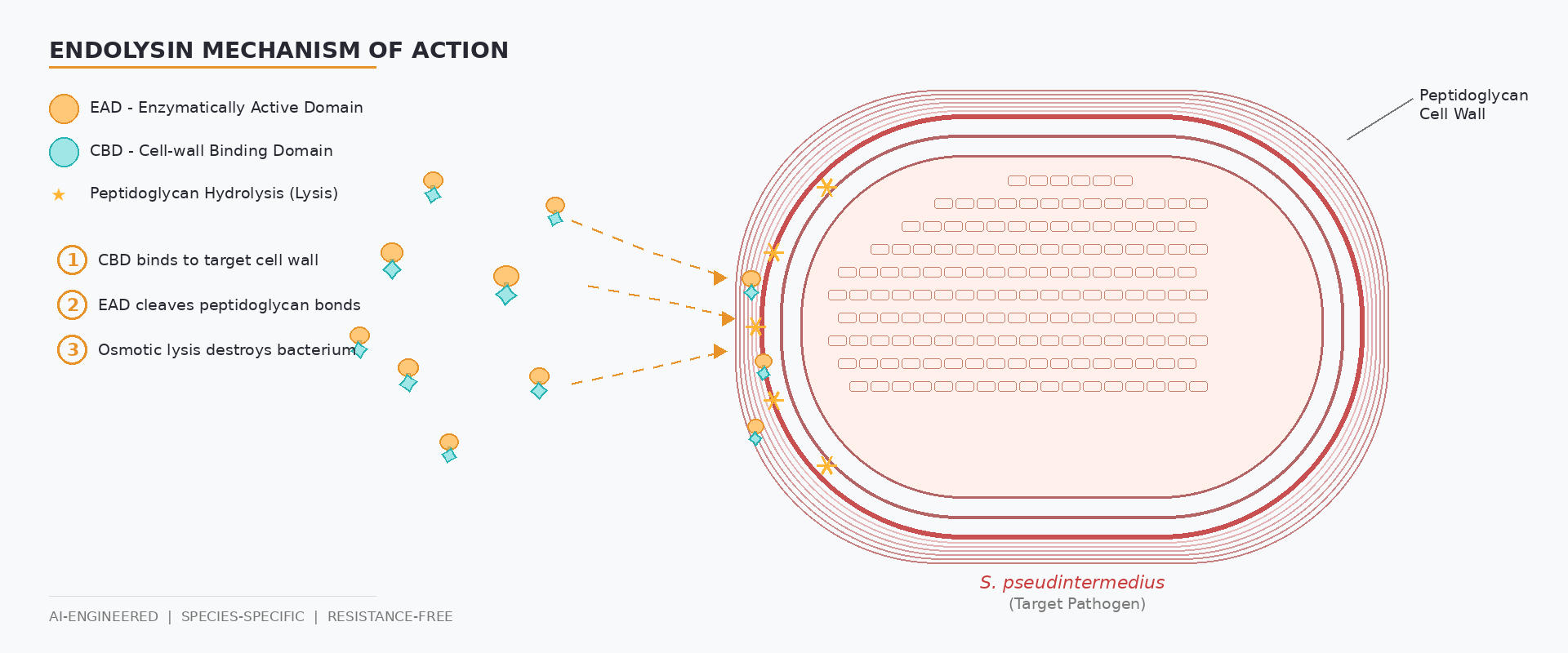
Our endolysin-based approach offers fundamental advantages over conventional antibiotic therapy for treating bacterial skin infections in companion animals.
| Feature | Endolysins (EndoPel) | Conventional Antibiotics |
|---|---|---|
| Speed of Kill | Minutes (complete lysis <5 min) | Hours to days |
| Specificity | Species-specific targeting | Broad-spectrum (kills beneficial bacteria) |
| Resistance Risk | No observed resistance development | Resistance is inevitable and accelerating |
| Microbiome Impact | Preserves beneficial microbiome | Disrupts microbiome; secondary infections common |
| Administration | Topical (targeted to infection site) | Typically systemic (oral/injectable) |
| AMR Stewardship | Fully aligned with global guidelines | Contributing to the AMR crisis |
We welcome conversations with veterinary professionals, potential partners, and investors.
GET IN TOUCH